contact us

contact us

DAMS Incorporated
We provide customers with quality products and provide high-quality services
If you would like to leave us a comment please go to
Contact Us


Lace type, hair density, and hair length determine raw material consumption and labor complexity in human hair wig manufacturing. Larger lace coverage, such as full lace or 13x6 frontals, requires extensive hand-knotting, driving up labor costs. Higher density increases raw human hair weight per unit, while longer hair strands command exponential raw material price premiums due to scarcity. Combined, these three factors dictate baseline wholesale and retail pricing structures.
The manufacturing valuation of human hair wigs depends on raw material acquisition and precision assembly processes. Guangzhou Ruiju E-Commerce Co., Ltd. analyzes these cost drivers during production planning for global markets, ensuring structured product tiers for distributors and salon professionals.
Lace construction impacts both comfort and production expense. Machine-sewn wig caps require minimal manual input, whereas lace closures (4x4, 5x5) and lace frontals (13x4, 13x6) demand individual hair strands to be hand-knotted into the lace mesh. High-definition (HD) lace and transparent lace variants add material premiums over traditional Swiss lace due to their delicate, invisible grid properties. For example, high-volume orders such as a 300-piece lace closure and frontal wholesale project supplied to Nigerian wig manufacturers demonstrate that standardizing lace dimensions helps maintain targeted unit costs for salon-grade customization.
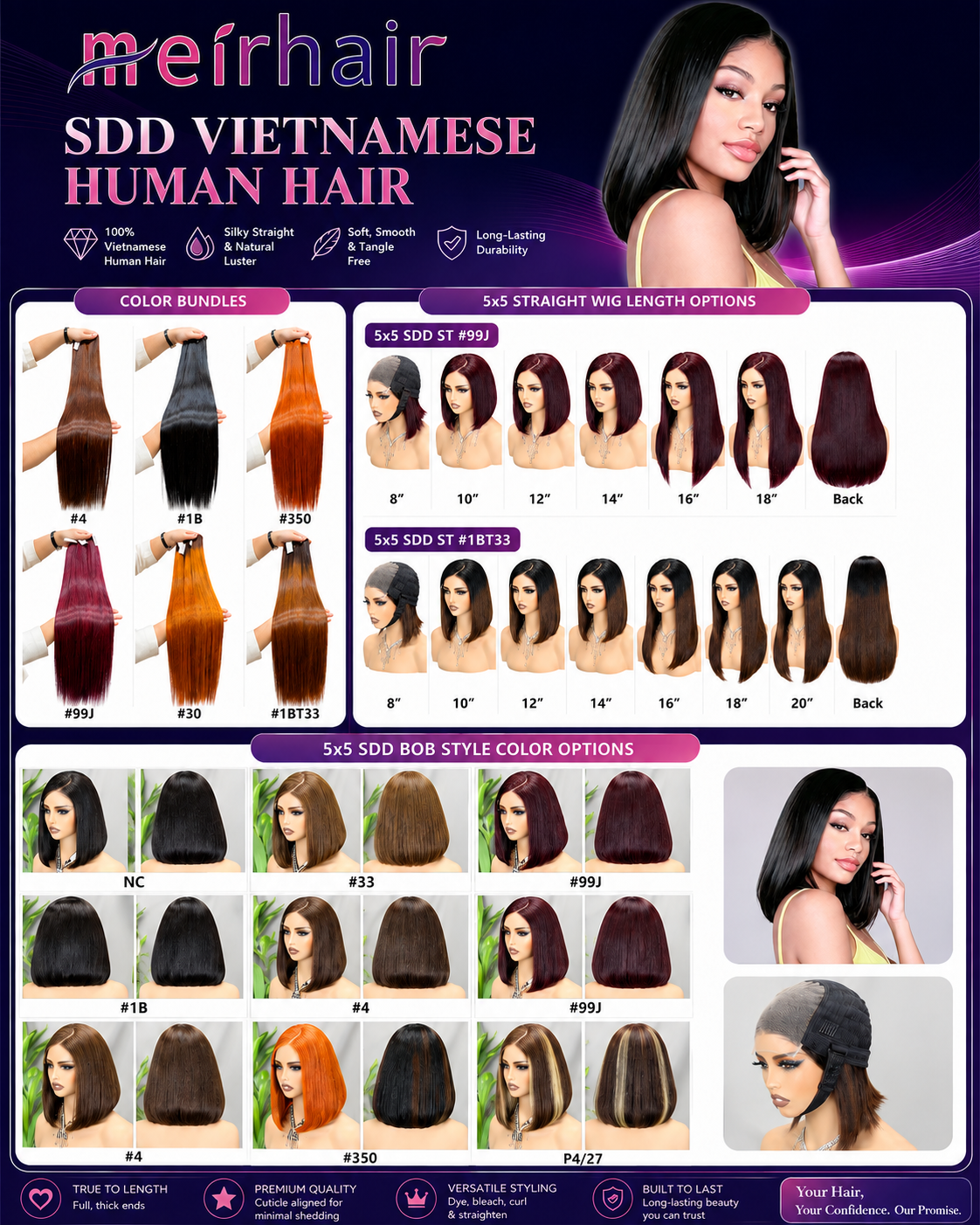
Hair density defines the volume and fullness of the unit. A baseline density of 130% uses fewer hair bundles, making it lightweight and cost-effective. Increasing density to 180% or 200% requires significantly more donor hair grams per cap. In products like Human Hair Bob Wigs ranging from 8 to 16 inches, higher density directly increases unit weight, shifting raw material costs accordingly.
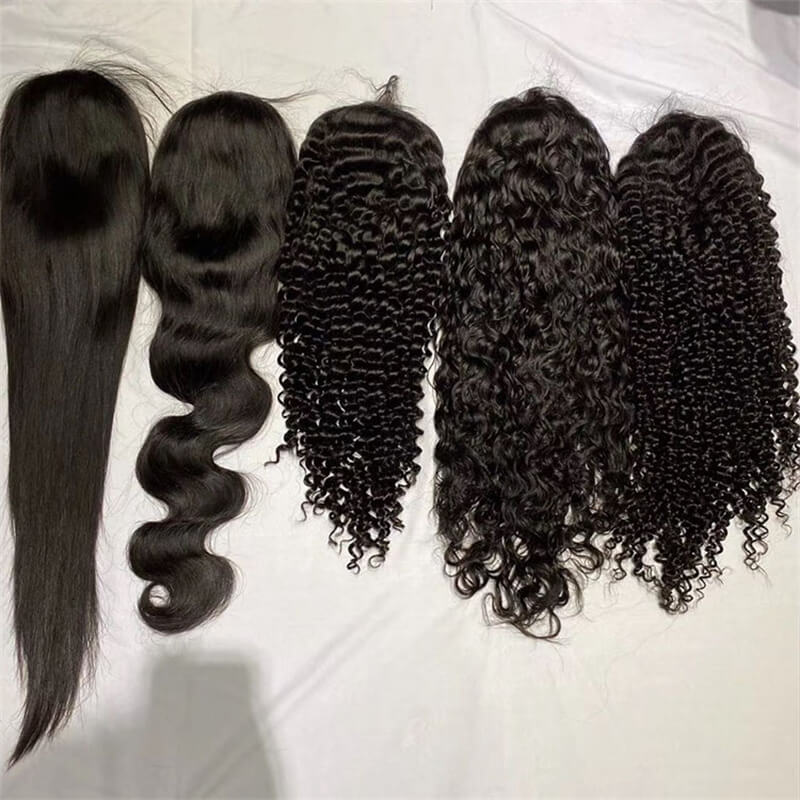
Length scaling follows a supply-driven pricing curve. Short lengths (8–12 inches) utilize readily available donor hair stock, yielding competitive price points for bob styles. As length requirements expand to 16 inches and above, raw hair collection costs rise due to limited availability. When bulk supply projects—such as a 500-bundle order distributed in the United States—require consistent lengths and textures (Straight, Body Wave, or Deep Wave), precise sorting standards ensure uniform weight and length distribution across production batches.
| Wig Component / Feature | Specification Variance | Labor Intensity | Raw Material Impact | Relative Pricing Impact |
|---|---|---|---|---|
| Lace Area Type | 4x4 Closure vs. 13x6 Frontal | Low (Closure) to High (Frontal) | Standard Swiss vs. Ultra-Fine HD Lace | Moderate to High increase based on hand-tying hours |
| Hair Density | 130% vs. 180% / 200% | Moderate adjustment | +20% to +50% additional hair weight by volume | Direct linear increase tied to gram weight |
| Hair Length | 8–12 Inches vs. 14–16+ Inches | Standard assembly | Higher raw donor hair market acquisition costs | Non-linear price scaling as length increases |
| Cap Structure | Machine Weft Cap vs. Full Hand-Tied Lace | Automated (Weft) vs. 40+ manual hours | Cap netting, elasticity bands, PU seamless inserts | Highest impact on total unit price |
How does lace size affect custom wig order quotes?
Lace size dictates the manual labor involved in ventilation. Larger lace structures like 13x4 or 13x6 frontals cover ear-to-ear hairlines, requiring thousands of hand-knotted strands, which raises the manufacturing cost relative to small closures.
Why do longer hair lengths cost significantly more per inch?
Raw intact human hair strands measuring 18 inches or longer are far less abundant in raw material markets. Processing intact full-length bundles without mixing shorter fillers drives up procurement expenses per kilogram.
What are the standard order lead times and MOQs for human hair wigs?
Ready stock products ship within 7 days, while custom orders requiring specific lace sizes, densities, or colors take 15 to 30 days depending on complexity. Minimum order quantities start at 1 piece for stock items.
Evaluating human hair wig pricing requires balancing lace dimensions, density requirements, and strand length against market needs. Sourcing strategies benefit from clear specifications, whether selecting ready-stock bob wigs for quick retail turnover or customized OEM/ODM production runs for private-label brand growth. Commercial buyers can leverage flexible payment options such as T/T bank transfer, Alibaba Trade Assurance, and PayPal alongside door-to-door express, air freight, or sea freight logistics. For detailed technical solutions or support, please reach out to us via sales@brazilianhairtop.com.
Guangzhou Ruiju E-Commerce Co., Ltd. operates the professional human hair brand meirhair. Established in 2014, the company features a 5000 sqm factory area and employs 50 specialized staff members focused on development, quality control, and global trade execution. With technical R&D capabilities across hair textures, custom lace frontals, and colored extensions, the enterprise has supplied wig wholesalers, braiding salons, and e-commerce sellers across North America, Europe, and Africa.

Related Products
_1.jpg)
.jpg)