contact us

contact us

DAMS Incorporated
We provide customers with quality products and provide high-quality services
If you would like to leave us a comment please go to
Contact Us


Separating installation errors from genuine crochet hair defects involves inspecting structural integrity before application. Installation errors cause localized slippage, excessive tension shedding, or uneven looping patterns due to improper latch-hook tension or braid base tightness. Genuine product defects manifest uniformly across unused bundles as premature matted synthetic fibers, inconsistent curl retention, weak knot security, or factory chemical coating residue.
Determining whether performance failures originate from technician error or material defect requires isolating the physical dynamics of crochet hair installation. In application scenarios like braiding salons and African hair styling, crochet hair extensions are secured to base cornrows using a latch hook. Improper anchoring—such as tying single knots on thick hair density or pulling excessive fiber bulk through a single braid opening—causes premature slippage and strand unraveling that mimics poor knot binding.
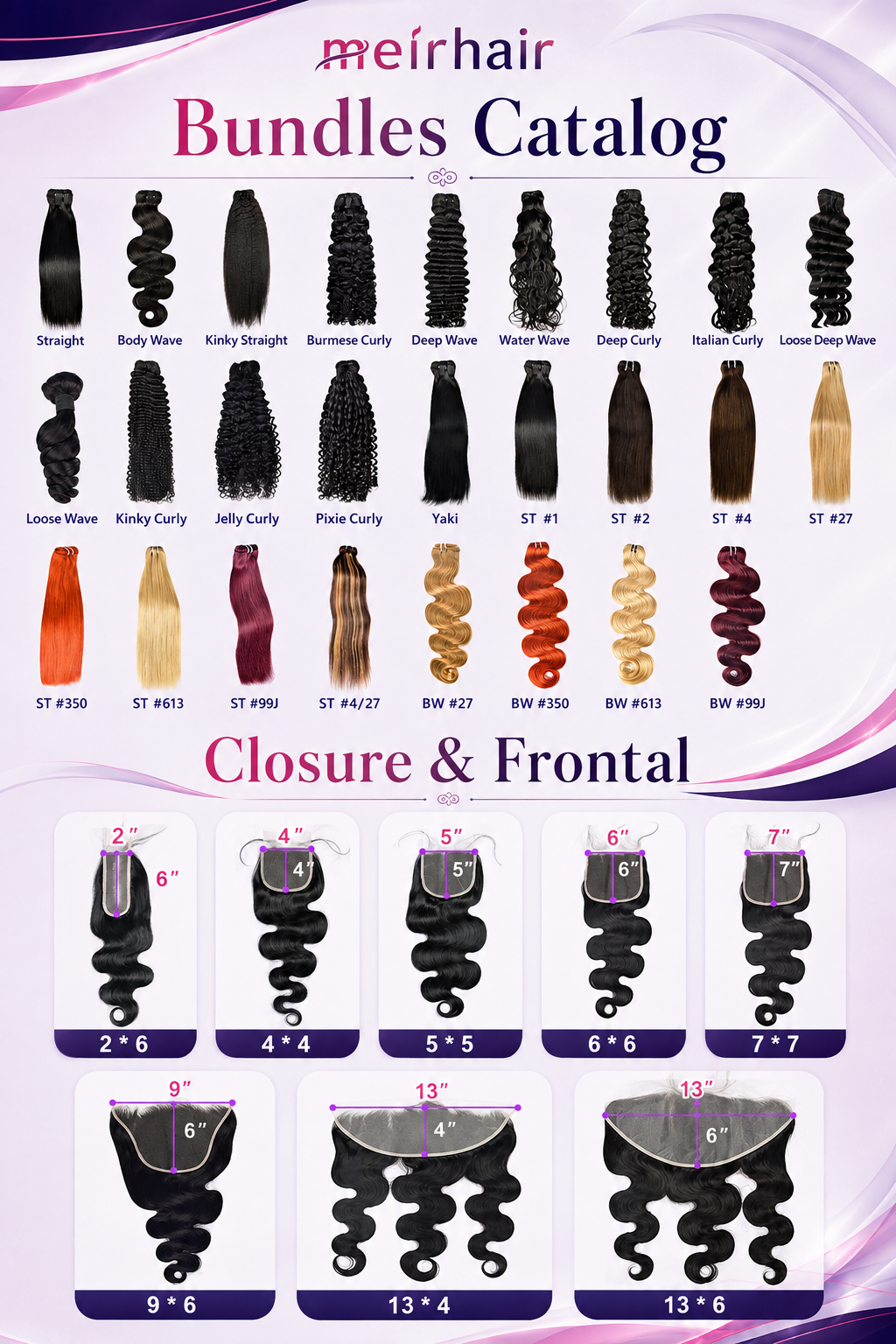
Conversely, raw material defects originate during fiber processing and bundle construction. High-grade 100% human hair extensions maintain aligned cuticles and consistent strand resilience across various textures including Straight, Body Wave, Deep Wave, and Kinky Curly. Manufacturing defects present as irregular curl pattern loss upon initial wetting, thread unravelling along pre-looped bases, or harsh chemical odor resulting from improper color processing across shades like Natural Black, #1B, #27, or #99J.
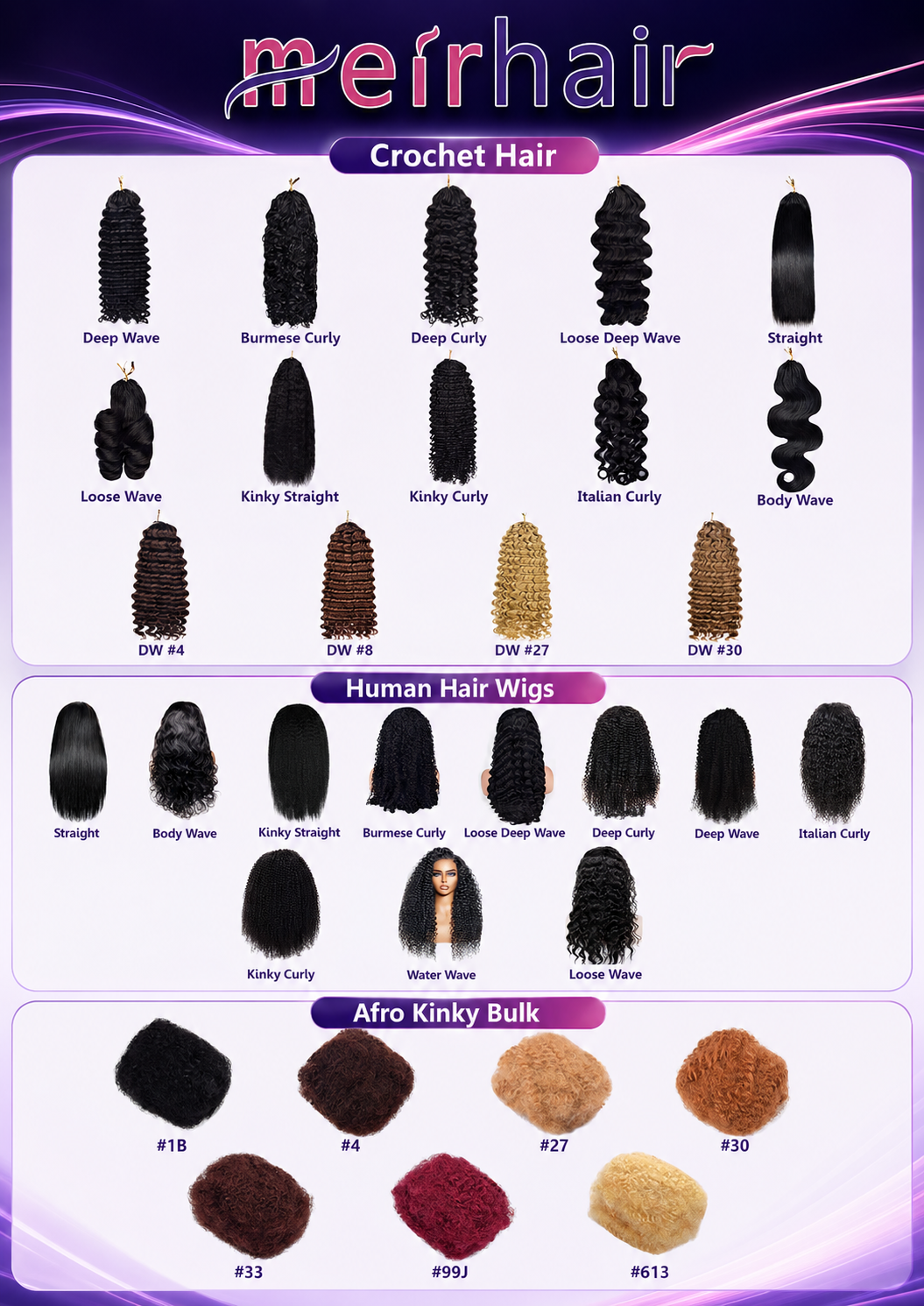
In wholesale supply projects, such as a recent distribution effort supplying 400 pieces of crochet human hair extensions to beauty distributors in France, pre-shipment quality checks prevented technical installation disputes. Conducting dry-tether tests on sample bundles separates handling friction from internal fiber weaknesses before salon installation takes place.
| Diagnostic Parameter | Installation Error Symptom | Genuine Hair Defect Symptom | Verification Protocol |
|---|---|---|---|
| Loop Slippage | Occurs on select high-tension areas (edges, nape) due to loose base braids or single-knot looping. | Occurs uniformly across the head due to broken or improperly bonded factory pre-loops. | Pull test uninstalled loops directly from the bundle bundle before installation. |
| Fiber Shedding | Strands pull out at the loop base where the latch hook split the strand bundle during installation. | Loose fibers fall out from uninstalled strands during gentle finger-combing. | Combing test on uninstalled raw hair bundles prior to latch-hook application. |
| Severe Tangling | Tangling develops after exposure to unapproved heavy gels, oils, or friction during sleep. | Instant matting upon initial unwrapping or immediate texture distortion after light misting. | Inspect raw strand alignment and perform a moisture-responsiveness test on unused samples. |
| Pattern Inconsistency | Uneven curl distribution resulting from over-stretching strands during tight knotting. | Varying wave or curl tightness across bundles of the same designated texture and length. | Side-by-side visual comparison of uninstalled bundles under standard lighting. |
Q: Why does crochet hair slip off the base braids shortly after installation?
A: Slippage typically occurs when the anchor cornrow is braided too loosely or when the technician loops the hair strand too few times for its specific texture. Smooth, straight human hair textures require multiple loop locks per strand, whereas kinkier textures require fewer loops due to natural surface friction.
Q: Can thermal styling tools turn installation errors into permanent hair defects?
A: Yes. Exceeding recommended heat limits or applying heat tools to non-heat-resistant synthetic fibers causes melting and matting. This thermal damage results from technician operational error rather than an inherent manufacturing defect in the human hair material.
Q: How can salon owners test wholesale hair orders for quality before client appointments?
A: Salon owners should conduct standard raw hair inspection upon receiving inventory: test knot security on uninstalled pre-loops, perform a dry finger-comb test for shedding, and apply a mild wash test on a sample strand to evaluate curl retention and color fastness.
Isolating installation errors from true product defects requires structured raw hair inspection before any latch-hook styling begins. Evaluating strand shedding on loose hair, checking loop integrity, and confirming texture consistency protects stylists and distributors from technical misdiagnoses. Sourcing human hair products supported by rigorous pre-shipment quality control—spanning raw hair inspection, length, weight, and texture verification—ensures predictable styling performance for salons, retailers, and private label hair brands. For detailed technical solutions or support, please reach out to us via sales@brazilianhairtop.com.
Guangzhou Ruiju E-Commerce Co., Ltd. operates the professional human hair brand meirhair, specializing in human hair wigs, hair bundles, lace closures, Boho braids, and crochet hair extensions. Established in 2014, the company maintains a 5,000 sqm factory area and strong R&D capabilities for hair textures, colors, and attachment systems, serving a 100% export market across North America, Europe, Africa, and the Middle East. The enterprise provides OEM/ODM customization and wholesale supply, having served clients across multiple global hair styling industries.

Related Products
_1.jpg)
.jpg)